| |
It’s a new year and it’s time for the latest issue of Legacy News! We hope you will find the articles helpful.
The articles that follow illustrate tax-wise planning strategies and possible gifting opportunities that allow you to make a meaningful charitable gift while potentially enhancing your own, and your family’s future financial well-being, including one example of how to plan for a disabled loved one within your estate plan.
See why supporters like Marvin Larsen joined the Legacy Society. And if you have a personal Red Cross story, we hope you will share it!
Rebecca Locke
Executive Director, Gift Planning
American Red Cross
|
| |
|
 |
| |
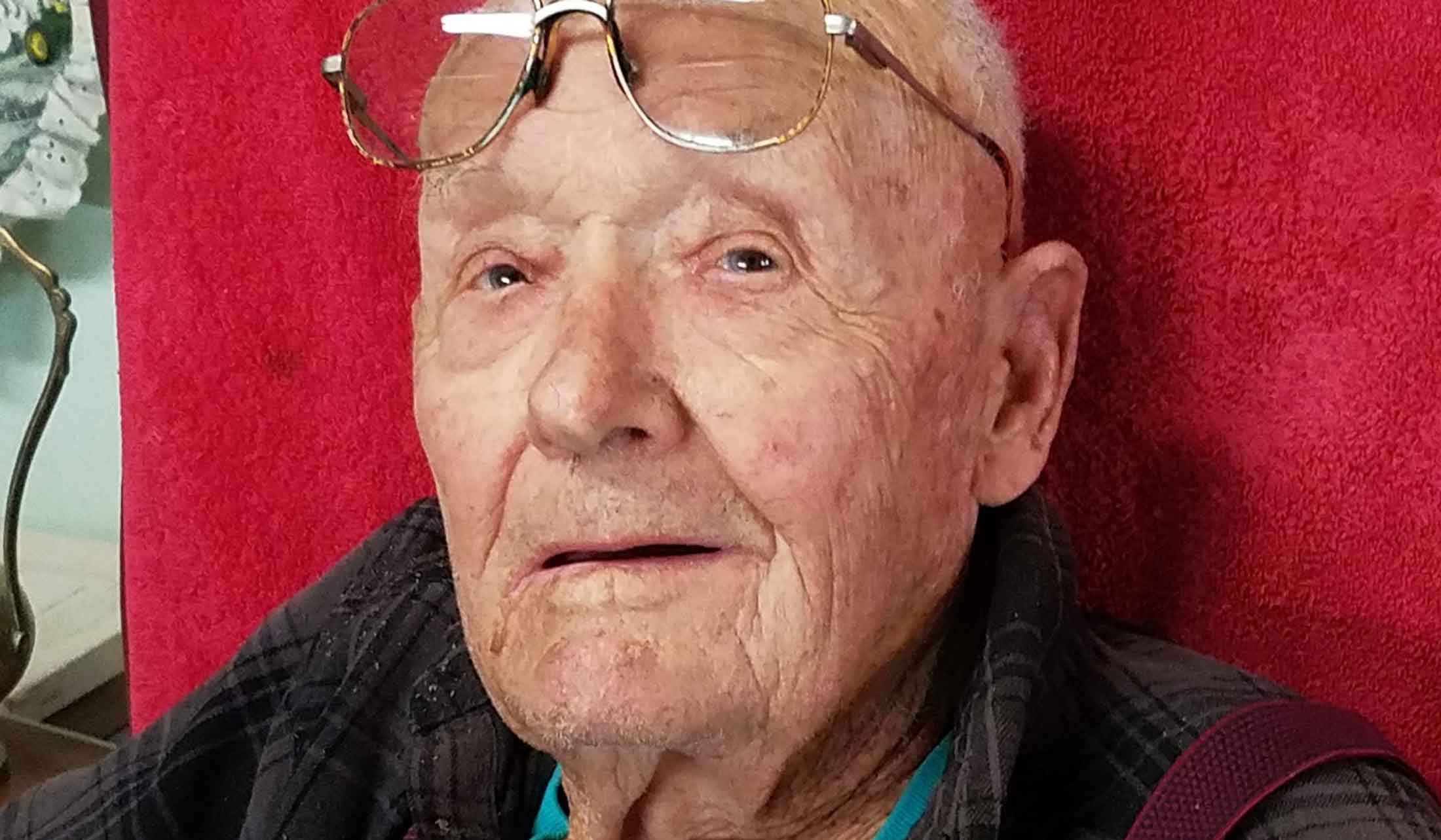
Marvin Larsen–Legacy Society Member
Marvin Larsen has been two things his entire life: a farmer in central Kansas and a caring neighbor. Since he was a child, Marvin worked the family farm; a year-round job with each year’s income not guaranteed. And because of that uncertainty–neighbors worked closely together. “We had to neighbor, we didn’t have a choice. Many years ago, there were 4-5 families in one section (about 1 square mile or 640 acres). We shared food, fed horses, butchered meat together–we made sure we all survived. If we weren’t good neighbors, we wouldn’t have anything.”
As the years went by, Marvin saw many changes. “With equipment and improved farming, now there’s not even one person on average per section. I’ve made more money from farming, but there’s less people doing it. My neighbors are spread out.”
A few years ago, Marvin survived a heart attack. It didn’t stop him from still climbing into the combine to plant and harvest, but it did make him think. “I decided then and there, I’d better have a plan in place for my estate.”
Marvin drew up a Charitable Trust, naming the American Red Cross as one of his five charitable organizations that would share in his estate. “I see Red Cross helping people all around me–disasters, helping the troops, first aid, etc. The Red Cross doesn’t choose who they help, they help everyone, everywhere. That is very important to me.”
His concern for those faced with disaster comes from knowing people today don’t have access to close neighbors like he had growing up. “Those wildfires this year seemed endless–I don’t know how people are able to cope. I’m giving to the Red Cross because I have more than enough and I want to give back.”
Through Marvin’s generous and thoughtful gift, he will ensure the American Red Cross can carry on the work of being good neighbors to folks everywhere.
If you would like information about how you can support our mission and help those in need by creating your own legacy like Marvin Larsen has done, contact the Gift Planning Office at 1-800-797-8022, ext. 5, or at giftplanning@redcross.org.
|
|
| |
|
 |
| |
Enhancing The Life of A Disabled Loved One
Sondra, a widow in her late 70’s, had one surviving child–a son Andrew, age 57–who was disabled. Andrew resided in a residential community with other disabled individuals. When Sondra met with her estate planning attorney she clearly expressed her one objective–the assets in her estate were to be used to enhance Andrew’s quality of life without jeopardizing Andrew’s Medicaid and other public benefits.
Through careful planning, family members can make assets available to enhance the quality of life of a disabled loved one without disqualifying the individual from essential need-based government benefits. Need-based government programs such as Supplemental Security Income (SSI) provide income to qualifying disabled individuals based on allowable resource or income limits. By qualifying for a need-based program, a disabled individual may also receive Medicaid benefits, which are crucial for medical care that most disabled individuals could not afford. Well intentioned family members who wish to financially benefit a disabled loved one must be vigilant to avoid disqualifying their loved one from government benefits. The key to preserving government benefits is to not have the disabled individual the owner of assets that would exceed allowable resource or income limits.
A third party special needs trust is ideally suited to accomplish this objective, as the disabled beneficiary is not considered the owner of the trust assets. Funds contributed to a third party special needs trust can be used to pay for activities of a disabled beneficiary not covered by government assistance. Examples of these activities are entertainment, trips and vacations, transportation, computer equipment, and companion services.
A third party special needs trust has another benefit. Because the disabled individual does not have an ownership interest in the trust assets, when the disabled individual passes away there is no requirement for assets remaining in the special needs trust to reimburse the government for the cost of Medicaid benefits provided to the individual. Any remaining trust assets can pass to family members or others, including charities, designated by the person establishing the trust.
A special needs trust can be established during lifetime or through an estate. A concern of families establishing such a trust–often parents or grandparents–is that the special needs trust has sufficient funding to last the lifetime of the disabled loved one. For the philanthropically inclined, establishing a separate charitable trust and designating the special needs trust to receive periodic payments from the charitable trust accomplishes all objectives. When the disabled beneficiary passes away, the charitable trust ends and any remaining funds in the trust will be distributed to those charities named by the trust donor. Any remaining funds in the third party special needs trust will be distributed per the instructions of the special needs trust donor.
These financial and estate planning techniques require professionals skilled in tax and estate planning, disability law, and trust law. State laws vary, so the attorney must also be knowledgeable about state laws pertaining to special needs trusts. We can assist in locating those professionals who can explore with you these financial opportunities that can make a meaningful difference in the quality of life for a disabled loved one.
To learn more about making a meaningful gift through a trust, contact the the Gift Planning Office at 1-800-797-8022, ext. 5, or at giftplanning@redcross.org.
|
|
| |
|
 |
| |
A Family Friendly Way to Give
“Family first” is a phrase that carries profound meaning. “Family first” underscores the fundamental role that “family” normally plays throughout our lives. It’s also a phrase that figures prominently in estate planning, the process of determining the disposition of your assets once you pass away. You may be surprised to learn that a tax-wise estate plan could include provisions for making charitable gifts from your estate, including a gift to the Red Cross, which would also leave family members with a larger inheritance than if you had not made such a gift.
You’ve worked hard to save for yourself and your family, and most likely have accumulated assets in plans such as 401(k)s and traditional IRAs. These are the assets that you use to enjoy life in retirement. They can also make up a portion of your estate at your death. Unfortunately, retirement assets carry a heavy tax burden when they pass to family through your estate. If you are subject to maximum taxation, the combined taxes (income taxes, as well as federal and state (if applicable) estate taxes) on your IRA and similar assets can reach nearly 80%, leaving your family with only about 20% of the original value. However, when you leave these investments to the Red Cross, 100% of your gift is free from income and estate taxes, and you receive an estate tax charitable deduction which reduces the taxable size of your overall estate.
You can make this gift by designating the Red Cross as a beneficiary of your retirement plans. This “beneficiary designation” is one of the most family friendly and simplest ways to make a gift. Keep in mind that you don’t need to make the Red Cross the sole beneficiary. For example, you could name your family as a 75% beneficiary of your IRA and the Red Cross as a 25% beneficiary.
Alternatively, you could name the Red Cross as a contingent beneficiary. For example, you could specify that your IRA would only pass to the Red Cross if your spouse (or children, or other heirs) were to die before you. All you need to do is to request a Beneficiary Designation Form from your plan administrator and designate the Red Cross as a beneficiary of either a percentage of your plan balance, a specific dollar amount, or subject to a contingency that you control.
You may find that you own certain assets outside of retirement accounts that you wish to use for a gift to the Red Cross when you pass away. A simple beneficiary designation form known as “Pay on Death (POD)” or “Transfer on Death (TOD)” will accomplish this for you. You can use these forms for a brokerage account, bank account, certificate of deposit or other financial accounts that you want to come directly to the Red Cross upon death and your estate will receive an estate tax charitable deduction for this gift.
If you would like additional information on providing for your heirs and the Red Cross, contact the Gift Planning Office at 1-800-797-8022, ext. 5, or at giftplanning@redcross.org.
|
|
| |
|
 |
| |
One size doesn’t fit all
People often ask “what’s the best way to make a gift to the Red Cross?” Our answer: “It’s what works best for you.” Some people may opt for writing a check or transferring appreciated stock to save on capital gains tax. Others might prefer to make their gift by bequest or through a beneficiary designation because they want the flexibility of controlling their resources. But for many people, combining several options will be the best way to make the greatest charitable impact.
As an example, let’s take a look at two people, Sarah and Jason, who both want to make a gift of $100,000, but take different approaches because of their specific goals: Sarah wants to see her gift at work as soon as possible, but she also has concerns about retirement and making sure she doesn’t run out of money. She decides to:
- Transfer outright to the Red Cross highly appreciated stock, currently valued at $30,000 and paying no dividends. She’s pleased to know her gift is making a difference now, but also pleased to avoid the capital gains tax she would have paid if she’d sold the stock.
- Contribute $20,000 cash for a charitable gift annuity, providing her a life-time stream of income, some of which will be tax-free. The Red Cross will invest the contribution, make the payments, and at her passing the remainder will be available to support our work.
- Provide for a $50,000 bequest to the Red Cross in her will. This allows Sarah the security of having access to these assets “just in case” during her lifetime. Jason wants to establish a named endowment but prefers to spread out the funding. He opts to:
- Sign a pledge to contribute $10,000 for each of the next 5 years.
- Name the Red Cross as a beneficiary of his retirement plan in the amount of $50,000, with the funds directed to his endowment.
Given the unique circumstances for each individual, the combinations for making a gift are too numerous to list here. As you think of your giving to the Red Cross we’re happy to talk with you about how to make it fit just right for you.
For information on making a charitable gift by will contact the Gift Planning Office at 1-800-797-8022, ext. 5, or at giftplanning@redcross.org.
|
|
| |
| |
|
|