Stacie’s disaster story: Red Cross ensures ‘we are well taken care of’
See how the Red Cross made a difference in the lives of Stacie and her Family when tornadoes ravaged her home: youtu.be/Jz59hqNTJzU
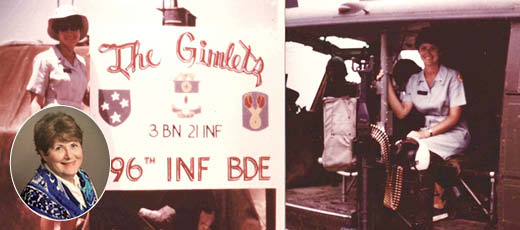
Mary Laraine “Larry” Young Hines, Legacy Society Member
Mary Laraine “Larry” Young Hines recently shared with us why she chose to leave a gift for the American Red Cross in her will. Larry hopes that by sharing her story and reasons for providing support, more people will be encouraged to make gifts in their wills to meet the need of future generations of people requesting our help.
Larry began her relationship with the Red Cross almost as early in her life as she received her nickname “Larry” from her parents, derived from her middle name, Laraine. She deals with the name confusion all the time. “The American Red Cross has always been important to me dating back to my mother being a ‘Gray Lady’ in WWII when my father was serving in the Navy in the South Pacific,” Larry recalls. “I collected pennies for the Red Cross in elementary school. I was a hospital “Candy Striper” volunteer in high school, and I donated my first pint of blood, at my mother’s insistence, on the very day I turned 18.”
In the 1960’s and ‘70s there were limited ways a women could serve our country and the Armed Forces. One way was to be recruited for the Supplemental Recreational Activities Overseas Program (SRAO). SRAO was a very selective program in which women became uniformed Red Cross staff and were stationed in either Vietnam or Korea to support members of the Armed Forces. Larry chose to serve in Vietnam.
Only 627 young women, all college graduates, were allowed to serve as SRAO workers, also known as “Donut Dollies,” in Vietnam between 1965-72. Their main mission was to fly out in Army helicopters to remote firebases and landing zones in the field to be “A Touch of Home in the Combat Zone.“ We gave away toiletries, candy, books, games, smiles, and friendly hugs to cheer up these young men. In a few larger basecamps, the SRAO girls operated small recreation centers where off-duty soldiers and airmen came in to read and write letters home, play cards, get some snacks, or just to have a conversation with an American girl halfway around the world. “I’m so lucky to have been given this life-changing opportunity.“ Larry shared that her time in service inevitably impacted every other facet of her life and has shown her just how much the kindness of a stranger offering help and compassion can affect other people.
Three SRAO-Vietnam women died on duty in Vietnam and Larry frequently makes trips to a small memorial garden at the American Red Cross National Headquarters in Washington, DC that lists the names to pay her respects to her three SRAO sisters. “We will never forget them,” stated Larry. Ironically one of the three SRAO casualties was from the same county in North Carolina where Larry grew up. “I do think about her often because I feel such a sad connection with her although we never met.“
“The American Red Cross changed my life and it’s part of my DNA,” Larry says. “I am honored to make a bequest to the Red Cross because its services are so critical and ongoing.” Larry’s legacy gift will help the American Red Cross continue its services that have been so important to her and so many people across America.
If you would like information about how you can support our mission and help those in need by creating your own legacy like Larry Young Hines has done, please contact our Gift Planning Office at, 1-800-797-8022,ext. 5,giftplanning@redcross.org.
Charitable Gift Annuity Rates Have Gone Up
Over the years, donors like you have found that a charitable gift annuity can be a great way to support the Red Cross and receive a lifetime of fixed amount payments in return. Thanks to a recent increase in rates, the charitable gift annuity just got better! The Red Cross can now offer you an even more generous annual payment.
Inflation is on the rise, and you may be disappointed with the interest rate paid by your certificate of deposit. Or perhaps you are concerned about bond prices and the continuing volatility in the stock market. A gift annuity from the Red Cross can provide you with a regular stream of fixed payments, likely much higher than your certificate of deposit is paying, while allowing you to make a generous charitable contribution.
A charitable gift annuity is a simple agreement between you and the Red Cross in which it promises to make payments of a fixed amount to you for life in exchange for your contribution today. Gift annuities are easy to set up and the payments you receive are backed by the general resources of the Red Cross. You can reserve lifetime payments for yourself or someone else, and you can name one or two recipients. Even better, if you itemize on your taxes, you receive an income tax deduction for the value of your charitable contribution.
Best of all, you will be making a generous contribution to support the work of the Red Cross. It’s a win-win!
Under the old rates, if a 79-year-old donor transfers $25,000 in exchange for a charitable gift annuity, they would have received annual payments of $1,550, a rate of 6.2 percent. However, with the new rates, that gift now provides $1,700 in annual payments, reflecting a 6.8 percent rate. That’s a payout rate increase of approximately 9.7 percent. Additionally, $1,237 of each annual payment is tax-free for the first 9.9 years of payments.
For more information on establishing a Charitable Gift Annuity, contact the Gift Planning Office at 1-800-797-8022,ext. 5,giftplanning@redcross.org.
Estate Planning in the Digital Age
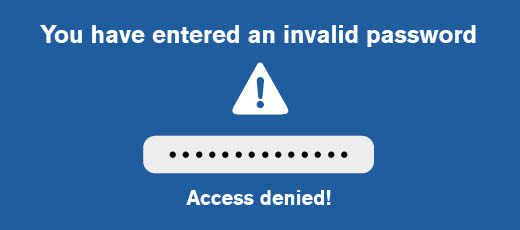
What would you do in this situation? You attempt to log on to your computer, only to find you no longer know your login or password. You’re locked out of the internet, emails, bank and investment accounts, and all your favorite web sites. Family photos accumulated for years are inaccessible. No access to Facebook, Instagram, Twitter, and your other social media accounts. You turn to your smart phone, but you don’t recall your password so you can’t access your contacts or use any of the apps. While this might sound like a bad dream, it is the situation the executor of your estate will encounter if you have made no provisions for access to your “digital life” upon your passing.
Written documents such as a will, trust, power of attorney, and healthcare directives continue to be the foundation for an estate plan and should be kept in a secure location available to those who will need them at the appropriate time. However, in this digital age, no estate plan is complete without providing a means of access to your digital accounts for either trusted family members or the person you named in your will to administer your estate. Here are several steps to allow access to your digital assets upon your passing:
List your digital accounts. Make a list of all your digital accounts with logins and passwords, including passwords to unlock your electronic devices. Include bank and financial accounts, bills that are paid automatically, credit card accounts, medical websites, accounts that you use for online shopping, and social media accounts. Keep this list in a secure place such as a home safe or bank safe deposit box accessible to either a close loved one or your professional advisor. While some advise against such written lists, it can speed the access that executors will need to gain control over your digital financial life. Another challenge to this method is that many sites require updating passwords on a periodic basis. Written lists of passwords can become stale quickly.
Security questions. When executors access a website, they may be asked for the security questions you established. Provide a list of these questions and responses should they be needed.
Password manager. Consider using a password manager that can store your account logins and passwords in a highly secure manner. These programs allow you to access your websites with one master password. Personal information such as funeral instructions and the location of important documents can also be stored. Other family members can have access to your information if they also participate in the program and you authorize their access. For example, if spouses exchange just the single password for their password manager software, the surviving spouse can easily access the deceased spouse’s digital accounts.
Social media accounts. Facebook, Twitter, Instagram and other social media accounts may play a significant role in how you connect with others digitally. Leave instructions readily accessible for how you wish such accounts to be managed after your passing. Should funeral arrangements be announced? Should the accounts be maintained or shut down? Also, individual social media providers may have policies once an account owner has passed away that may limit how the account is managed. You can store the logins and passwords to social media accounts in a password manager software.
Provision in your will or trust. Put a provision in your will or trust authorizing your executor to have access to your digital accounts. While this may not be controlling depending on the digital account provider, it is better to have such a provision than not. Do not list account information in a will as, once entered into probate, the will is a public document.
Experienced estate planning professionals are attuned to the importance of addressing digital accounts as part of an estate plan. Inquire about laws and provider policies that may inhibit your executor’s ability to access your digital accounts. In this digital age, no estate plan is complete without addressing your digital life.
Staying in touch via the American Red Cross email list is the best way we have of keeping in regular contact with supporters like you, letting you know about how you can protect yourself and your loved ones from disasters and other emergencies, and how you can support our life-saving work.
Click here to unsubscribe from our list, but please know that if you leave, it will be harder for you to stay involved with the Red Cross and continue the work of which you’ve been such a critical part. It is only because of supporters like you that the Red Cross is able to respond when a disaster strikes or a home is impacted by fire, when someone needs CPR or a lifesaving blood transfusion, or when a family needs to contact a deployed service member in an emergency. And we don’t want to lose you! Thanks for your support!