| |
It’s a new year and it’s time for the latest issue of Legacy News! We hope you will find the articles helpful.
The new Consolidated Appropriations Act of 2021 will impact many American’s tax situation and their charitable giving in 2021. The articles that follow illustrate tax-wise planning strategies and possible gifting opportunities that allow you to make a meaningful charitable gift while potentially enhancing your own, and your family’s future financial well-being.
See why supporters like Deborah Day Poor joined the Legacy Society. And if you have a personal Red Cross story, we hope you will share it!
Rebecca Locke
Executive Director, Gift Planning
American Red Cross
|
| |
|
 |
| |
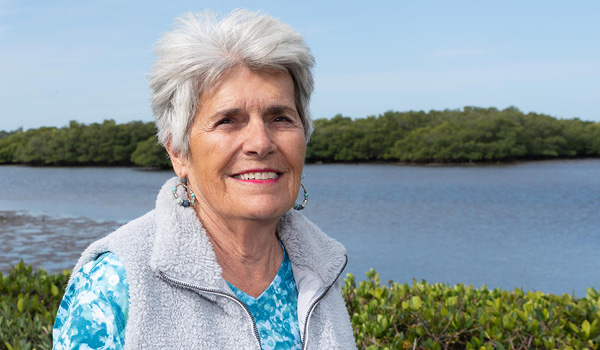
Legacy Society Member Honors Her Red Cross Heritage
Following her mother’s example, Deborah Day Poor has tried to live a life of purpose. And over the years, that seems to have reconnected her again and again back to the American Red Cross.
“My mother set an example of what was important in life,” says Deborah. “Happiness in life really does come from finding meaning, and it comes from purpose.”
Her mother was Dorothy Day, a World War II-era volunteer who organized blood drives in Upstate New York and later joined the Red Cross as a paid staff member in the 1950s.
Deborah’s own path with the Red Cross includes fondly remembered youth swimming lessons every summer in Lake Ontario, then decades later a job as a Red Cross swimming instructor. Now, still decades after that, she’s become a Legacy Society donor. And she’s writing a book about people who found purpose and meaning in their own lives to become some of the world’s big achievers. The book will include American Red Cross founder, Clara Barton.
Deborah traces it all back to when she was about five years old and heard her mother talking on the phone to line up blood donations and raise money for the Red Cross. She also recalls her mother visiting state schools, that at the time, provided homes for people with mental health challenges. Deborah was fascinated when her mother talked about their illnesses, their confinement and services the Red Cross provided.
After high school, Deborah’s own first job took her in another direction for six years. She became an airline reservationist and then a stewardess. That gave her a new life in New York City and the chance for international travel, but it didn’t fulfill her desire to do work specifically aimed at helping others. That came with marriage, two children and a move to Florida, where she worked for more than a decade teaching 3- and 4-year-olds to swim.
“That job gave me much more satisfaction than I got from being a stewardess,” she says. “I always got a good feeling when a child learned to swim…always thought it was worthwhile.” She remembers thinking: “Even if just one of these kids doesn’t drown it would be worthwhile.”
Then she hit the age of 41 and moved in yet another direction. Deborah went to college for the first time, getting an undergraduate degree and then a master’s degree in social work–six years’ worth of study completed in five.
For the last 30 years, Deborah has used that education as a mental health counselor. She has specialized in teaching parenting skills and treating addiction, eating disorders and relationship dependency. She’s also written two self-help books, so the upcoming book including Clara Barton will be her third.
Deborah says one of her favorite quotes is something Will Rogers noted about the Red Cross: “I think we sometimes forget how much the Red Cross does for us.“
Deborah hasn’t forgotten.
Among her reasons for becoming a Legacy Society donor to the Red Cross is “probably because it had so much of an effect on my life,” she says. It’s nice to give back to what helped you along the way.”
If you would like information about how you can support our mission and help those in need by creating your own legacy like Deborah, please contact the Gift Planning Office at, 1-800-797-8022, ext. 5, giftplanning@redcross.org or log on to redcrosslegacy.org.
We are grateful for our volunteers and extend our gratitude to Pauline Jelinek for volunteering her time to interview Ms. Poor and share her story.
|
|
| |
|
 |
| |
Special Tax Incentives for Charitable Giving in 2021
We are happy to bring to your attention special incentives for charitable giving that Congress has extended as a part of the economic stimulus legislation addressing the far-reaching effects of the COVID-19 pandemic. Note that some of these incentives are temporary, scheduled to expire at the end of 2021.
Even if you don’t itemize your income tax deductions, you may reduce your taxable income as a result of your charitable contributions. For 2021 you can reduce your taxable income by up to $300 (or $600 for married couples filing jointly) for contributions of cash to public charities.
If you itemize, you may deduct gifts of cash to most public charities to offset as much as 100% of your income in 2021! Ordinarily, the income tax charitable deduction for cash gifts is limited to 60% of your income. This 100% limit allows especially generous donors to reduce their federal income tax to zero. If you are even more generous, you can carry forward unused cash contribution deductions for up to five years.
Note that it may not be the tax-wise choice to deduct up to 100% of your income. Because federal income tax rates are progressive, it is not a given that it will be to your advantage to deduct 100% of your cash contributions. Check with your financial or other advisors to determine whether the 100% deduction makes sense for your specific circumstances.
A qualified charitable distribution (“QCD” or “IRA charitable rollover”) is still a great way to make contributions if you are 70½ or older. A QCD allows you to make a tax-free contribution gift of up to $100,000 from your IRA. These are especially tax advantageous charitable gifts for non-itemizers. And, your QCD can count toward your required minimum distribution.
The Red Cross, with our partner FreeWill, is offering a free QCD transfer tool to guide you through the exact process required by the most popular financial institutions. If you use a different financial institution for your IRA, your IRA administrator can help you make a Qualified Charitable Distribution from your IRA. Many administrators require you to use their QCD distribution form and comply with other requirements. Follow your financial institution’s forms and procedures to ensure you receive the tax benefits of a QCD.
You have important priorities for your family and loved ones, and we know that their health and financial well-being comes first. When you are ready, we will be here to help you shape a charitable gift plan that suits your needs and allows you to keep helping with our important work.
To learn more about making a meaningful gift through an IRA, contact the Gift Planning Office at 1-800-797-8022, ext. 5 or at giftplanning@redcross.org.
|
|
| |
|
 |
| |
A Tax Smart Giving Solution
Do you have an investment which provides disappointing income despite having grown in value, but you hesitate to sell it because capital gains taxes would take a big bite out of your proceeds? A charitable remainder unitrust (CRUT) can increase your income, save taxes, and allow you to make a generous contribution to support the American Red Cross as we turn compassion into action.
There is no capital gains tax when you transfer appreciated assets to a charitable remainder unitrust and, because the trust is tax exempt, there is no tax when the trust sells the assets. As a result, your trust can put the full value of the asset to work paying you a fixed percentage of the trust value for life before it distributes whatever is left to the Red Cross. Even better, you will be making a future contribution to the Red Cross and receive an immediate charitable deduction which you can use to save on income taxes now.
For example, Bob and Nan, ages 68 and 65, own stock now worth $250,000 that they purchased years ago for $50,000. Although the stock has appreciated in value, it pays a modest dividend of only 2%. They know that if they were to sell, they would have a capital gains tax of $30,000 leaving only $220,000 to reinvest.
Instead of selling the stock, Bob and Nan choose a CRUT which will pay them 5% of the annual value of the trust each year for the rest of their lives. There is no capital gains tax when they contribute their stock to their trust and when the trust sells the stock it pays no tax either. As a result, Bob and Nan begin receiving income based upon the entire $250,000 value of the stock.
In addition, because whatever is left in their CRUT at the end of their lifetimes will go to the Red Cross, Bob and Nan will receive an immediate income tax charitable deduction of about $88,000, based upon their ages and depending upon the date of their contribution.
You can find more information about charitable remainder unitrusts on our website, http://www.redcrosslegacy.org. We encourage you to consult with your own advisors to decide whether a charitable remainder unitrust is right for you and your unique circumstances.
Goodbye “Stretch IRA”
The “Stretch IRA” allowed heirs to inherit your retirement account while postponing income taxes, but the SECURE Act curtailed the stretch IRA for most taxpayers. However, incorporating a charitable remainder trust into your will and providing income for your heirs, can achieve many of the tax advantages of a stretch IRA while leaving a remainder gift for the American Red Cross.
To learn more about making a meaningful gift through a CRUT, contact the Gift Planning Office at 1-800-797-8022, ext. 5 or at giftplanning@redcross.org.
|
|
| |
|
 |
| |
Planning in the New Year
As 2020 recedes in the rearview mirror, we turn our attention to the road ahead. No one can say what twists and turns await, but we know for sure, the need for preventing and alleviating human suffering in the face of emergencies continues.
The American Red Cross is grateful for the generous support of our donors who have made it possible for us to be there during this time of need. We understand the priorities you have for your family and loved ones, and we know that they come first.
In these times, you may be seeking ways of giving that preserve flexibility if your circumstances change. A charitable bequest–a contribution from your estate after you are gone–allows you to continue to support the Red Cross, while keeping your options open. You can change your charitable bequest at any time, if need be.
A charitable bequest can take many forms. The simplest is a contribution of a specific amount to the Red Cross. Or, you may wish to consider a contingent charitable bequest which allows you to set specific conditions under which your contribution will be made (for example, only if your spouse is no longer living). Perhaps a remainder charitable bequest, which provides for a contribution to the Red Cross only after all of your other heirs have received their distribution, is right for you.
Finally, if you have money in a retirement account, a contribution at the end of your lifetime can be a very tax efficient way of giving because it avoids the income tax that would be due on money left in your account when you are gone.
Your charitable contributions are a tangible way you make a positive difference and strengthen our community. We’ve all experienced the joy of seeing the results of our charitable contributions. It’s uncanny, but helping others helps us regain perspective on our own circumstances and gives us a sense of accomplishment by being a part of something larger than ourselves.
For information on making a charitable gift through your will contact the Gift Planning Office at 1-800-797-8022, ext. 5 or at giftplanning@redcross.org.
|
|
| |
| |
|
|